A Small Table Arrangement for a Shared Meal
Small table arrangement ideas for shared meals: choose a compact vessel and flower shape that leave room for plates, serving dishes and easy conversation.
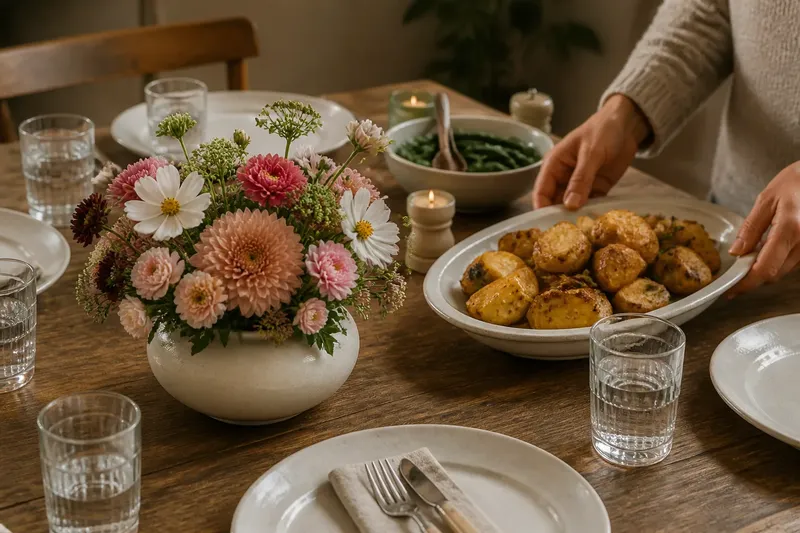
How do you make a small table arrangement that leaves room for dinner? A small table arrangement works best when its vessel and flowers fit around the plates, glasses and serving dishes already on the table. Decide where those things go first, then choose blooms that occupy the space left over.
Map the table space
Set out the plates, glasses and serving dishes before choosing a vessel. Notice where hands reach for cutlery and where a shared platter will travel. The flowers need a home that does not claim either route.
A round table often suits a compact cluster near the middle. On a narrow rectangle, a short line of flowers can work along the centre, or a small cluster can sit slightly to one side if that leaves serving space open. Let the actual meal determine the position; empty-table symmetry is not especially useful once the roast potatoes arrive.
Say you are arranging a small rectangular table for four. The hypothetical starting point is a platter passed along the right-hand side, with glasses near each place setting. Put the place settings and an empty serving dish in position, then set a low vessel on the left side of the centre. Add a compact group of short-stemmed flowers and move the dish along its usual route. If it passes without touching the vessel and the glasses remain easy to reach, keep that position; if not, shift the vessel towards the far end or reduce the arrangement.
Choose the flower shape
A compact outline makes a small arrangement easier to place. A rounded group can sit in a central patch; a low, elongated shape can follow a rectangular table’s length. Keep stems and foliage within the chosen outline rather than letting them fan towards the plates.
Spray carnations, compact chrysanthemums and short-stemmed seasonal flowers can form a close cluster. Cosmos and other open-faced blooms create a lighter shape, though they may need several stems to read as a group. Begin with a few stems, then add only if the arrangement looks sparse from the side where diners will see it.
Varying the flower heads slightly gives the cluster shape without requiring a tall central stem. Trim long stems with clean secateurs, adding small adjustments as you work. The aim is a distinct arrangement, not a miniature hedge.
Select a suitable vessel
A low, stable container supports the flowers without taking up unnecessary table space. A small jug, short glass or ceramic bowl can work if its opening lets you place the stems without crushing them. A narrow opening holds stems close; a broad one may need a flower frog or a loose grid of waterproof tape across the rim.
Check that the vessel holds enough water for the stems and does not wobble when nudged. Remove leaves that would sit below the waterline, and wipe away drips before placing it among the tableware. For flower preparation or any securing material, follow the grower’s guidance and the product label.
Turn the vessel as you add stems. This helps reveal gaps and keeps the shape from becoming lopsided, without requiring identical views from every seat.
Small table arrangement questions?
Where should a small table arrangement sit?
Place it in the area left free after plates, glasses and serving dishes are set out. If the centre is needed for shared food, shift the flowers towards an unused end or side.
How can flowers stay out of the way?
Keep the arrangement compact and remove stems or foliage that extend into the space needed for dishes. Test the serving route with the actual platter rather than guessing from an empty table.
Which flowers suit a small table?
Short-stemmed spray carnations, compact chrysanthemums and small seasonal blooms can form a tidy group. Open flowers such as cosmos make a less dense shape, so arrange them with enough space between heads to keep their outlines clear.
Can scented flowers go on a dining table?
Strong fragrance can compete with food, so choose lightly scented or unscented flowers if the aroma is pronounced. If you are unsure, place the arrangement elsewhere before serving and see whether the scent remains noticeable at the table.
Check the finished setting
- Serving route: Move the platter along its usual path; if it touches the vessel, shift the flowers or shorten the arrangement, otherwise keep the route clear.
- Place settings: Set down every plate and glass; if a stem crowds a place, trim or reposition it, otherwise leave the setting as arranged.
- Vessel stability: Gently nudge the table beside the container; if the vessel rocks, replace it with a steadier bowl or jug, otherwise keep it in place.
- Foliage: Look for leaves extending towards cutlery or dishes; if they cross into that space, remove or tuck them inside the outline, otherwise leave them.
- Waterline: Check for leaves below the water; if any are submerged, remove them and refresh the water, otherwise proceed with the arrangement.
- Flower shape: Turn the vessel and look for a bare gap or a crowded patch; if one appears, reposition a stem or remove an excess bloom, otherwise keep the shape.
- Fragrance: Notice whether the flowers’ scent is prominent at the table; if it competes with the meal, move the arrangement elsewhere, otherwise let it remain.
A small table arrangement is easier to live with when its position follows the meal rather than an abstract idea of a centrepiece. Check the serving route once more after the food is set out; a clear patch of table is a useful part of the design.