Tall Bud Vase or Wide Bowl: Choosing a Vessel for Your Stems
Choose a tall bud vase or wide bowl by matching vessel shape to stem length and spread, so existing flowers sit securely without forced trimming.
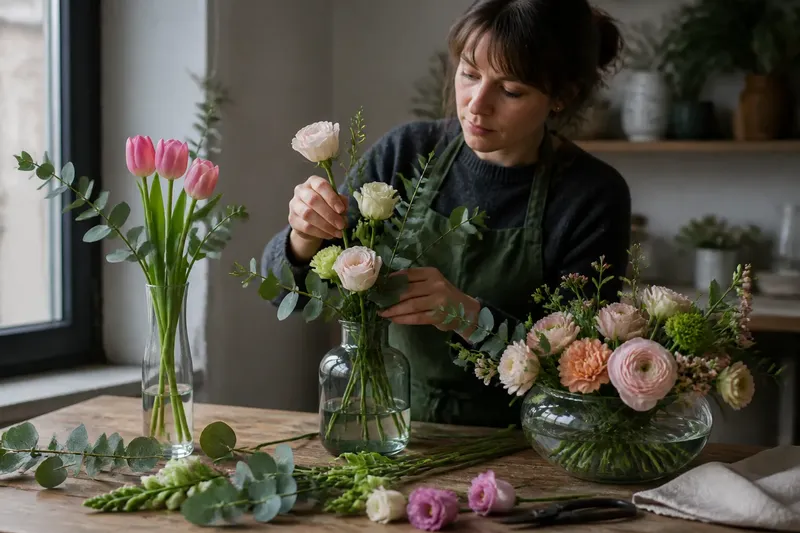
Should your flowers go in a tall bud vase or a wide bowl? Start with the stems you have: their length, stiffness and natural spread tell you more than the vessel’s appearance. A narrow vase gathers stems into an upright line; a broad bowl gives them room to fan out.
The useful question is not which vessel looks better on its own. It is which one supports the flowers without making them look cramped, limp or oddly sparse. A third option, a short-necked vase, can bridge the gap when stems are neither especially long nor suited to a tight cluster.
Tall bud vases
A tall, narrow-necked vase suits stems that can stand with modest support. Think tulips, snapdragons, lisianthus or a few leafy branches. Their stems rise above the rim, while the small opening keeps the group close together. This makes a bud vase a natural choice when you have only a handful of flowers or want each stem to remain distinct.
Stem length matters, but proportion matters more. A long stem in a very short vase may tip or make the arrangement look top-heavy. A shorter stem can disappear behind the rim if the vase is too tall. Set the vase beside the flowers and compare the visible flower heads with the vessel before trimming; the flowers should read as a group, not as a vase with a few accidental visitors.
The narrow opening also limits how far stems can lean. That is useful for straight or gently curving stems, but less helpful for flowers with heavy heads or foliage that wants to spread sideways. If the opening forces the stems into a crowded bundle, the vessel is doing too much of the arranging.
Choose a tall bud vase for upright stems, a small quantity of flowers, or a compact display on a shelf or windowsill. Choose another shape if the stems need broad support or their heads pull them outwards.
Wide bowls
A wide bowl suits flowers whose stems naturally splay, or a group that looks better low and open than tall and tight. It can accommodate curved stems, broad foliage and flowers with side-facing heads. The broad rim lets you distribute stems across the opening instead of forcing them into one upright bundle.
That freedom has a trade-off: a bowl provides less restraint at the neck because it has no narrow neck. Long, flexible stems may slide towards the edge, leaving flowers leaning over the rim. A low bowl is often easiest with shorter stems or with stems that hold their shape. If your flowers are long, check that their weight and angle remain balanced as you arrange them.
Water depth and access also deserve attention. A broad vessel can expose more water to leaves that fall below the waterline. Remove submerged leaves, and keep the opening clear enough to reach the stems when refreshing the water. A crowded bowl is awkward to maintain, even if it looked generous at first.
Choose a wide bowl when the flowers need room to spread and their stems can be supported across the base. It is a poor match for a few very tall, floppy stems unless you have a way to keep them in place.
Short-necked vases
A short-necked vase offers a middle ground: its opening gathers stems, while the body gives the arrangement more room than a narrow bud vase. This shape can suit mixed stems with varied lengths, such as roses alongside shorter foliage, provided the stems can sit at different angles without crowding one another.
Its main advantage is controlled spread. Stems are less likely to fan out as far as they might in a bowl, but they are not held as tightly together as in a tall, narrow vase. The shape is forgiving when flowers have a little volume, though a large opening may still leave a small bunch looking lost.
Use a short-necked vase if your stems are moderate in length, or if you want a loose cluster with some support at the opening. If the flowers barely clear the rim, the vessel is too tall; if they spill broadly and cannot stay balanced, consider a bowl or trim the stems to suit one.
Match shape to stems
Before choosing, lay the stems together on a table and look at how they behave without a vessel. Notice whether they remain upright, bow outwards, or cross one another. Then consider these practical checks:
- Length: Long stems generally need a taller vessel or deliberate trimming. Short stems are easier to display in a low bowl or compact vase.
- Stiffness: Firm stems can stand in a broad opening. Soft or bending stems usually need a narrower neck or another form of support.
- Flower-head weight: Heavy heads can pull a stem sideways. Check whether the vessel keeps the flowers balanced rather than tipping towards one edge.
- Natural spread: Branching stems and broad foliage need room. A tight opening may compress them; a broad rim lets them open out.
- Quantity: A few stems can look intentional in a bud vase. The same small bunch may seem scattered in a large bowl.
- Water access: Choose an opening that leaves room to remove old leaves and refresh the water without crushing the stems.
Say you have three long tulips and a few pieces of eucalyptus. If the tulips stand fairly straight, a tall bud vase can gather them while letting the eucalyptus sit at the sides. If the foliage pushes the flowers apart and the group keeps leaning, a short-necked vase offers more room without the full spread of a bowl.
Which vessel suits your flowers?
Can short stems go in a tall bud vase?
They can, but the flower heads may sit too close to the rim or disappear behind it. Try a lower vessel first, or trim the arrangement only if the resulting stem length still gives the flowers enough room above the opening.
Are wide bowls suitable for long stems?
They can be, if the stems stay balanced and do not slide outwards. Long, flexible stems often need a narrower opening or some unobtrusive support rather than a broad, open rim.
How many stems suit a bud vase?
There is no fixed count because stem thickness, foliage and opening width all affect the fit. Add stems gradually; stop when they sit together without being compressed or forced into an unnatural angle.
When is a short-necked vase the better choice?
Choose one when the flowers need some gathering but have more width or variation than a tall bud vase allows. It is also a sensible option when a bowl leaves the stems too loose and spread out.
Make the choice
Hold the stems beside each candidate vessel before adding water. Check whether the rim supports the stems, whether the flower heads sit at a comfortable height, and whether the arrangement keeps its balance when you turn the vessel. If it only looks settled from one angle, the shape may be working against the stems.
For a quick decision, choose a tall bud vase for upright stems and a compact cluster, a wide bowl for shorter or naturally spreading stems, and a short-necked vase when you need both some restraint and some room. The right vessel is the one that lets your existing flowers keep their own shape without asking them to behave like different flowers.
When you are choosing between options, the tall bud vase or wide bowl question comes down to support and spread, not a rule about which flowers belong in which container. Keep the vessel clean and use water suited to the flowers; where care instructions differ, follow the flower supplier’s guidance.